CONTEXT
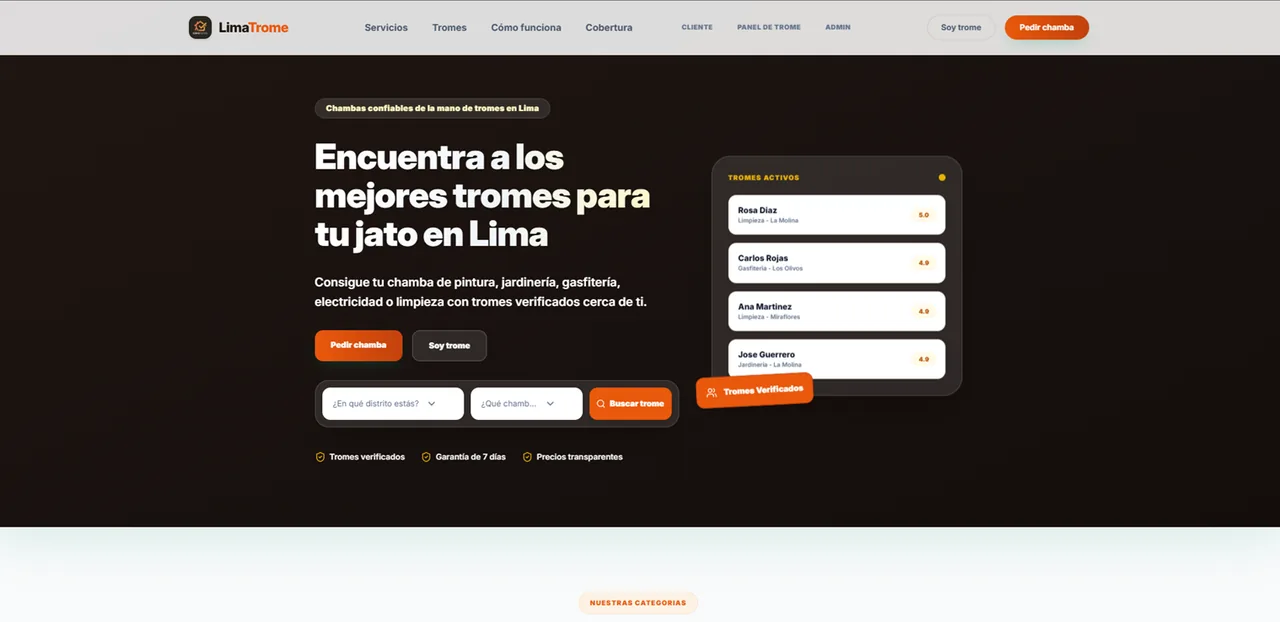
Full-stack marketplace MVP for hiring home services in Lima, Peru. Connects clients with maintenance professionals, replacing informal word-of-mouth recommendations with structured district search.
PROJECT OVERVIEW
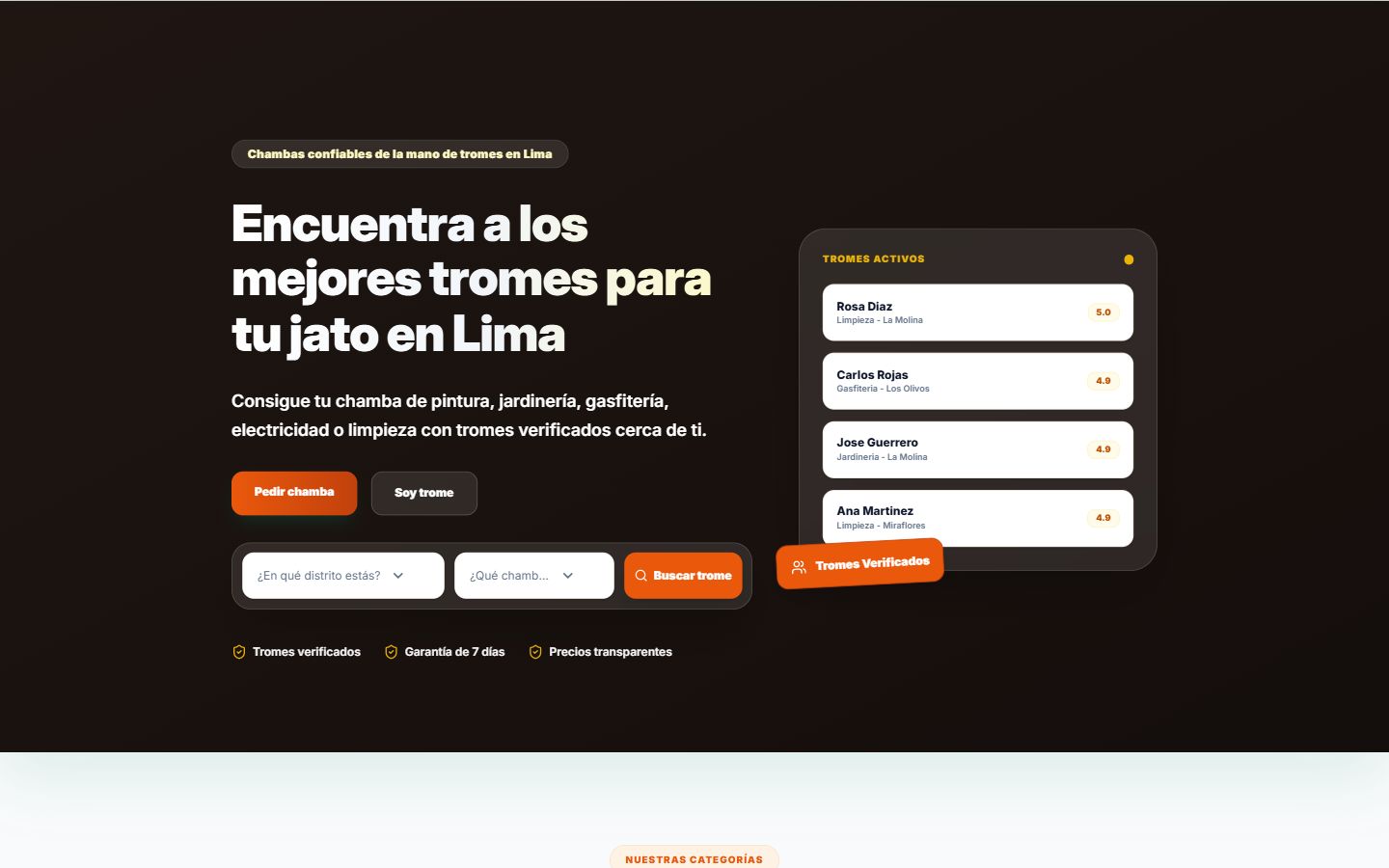
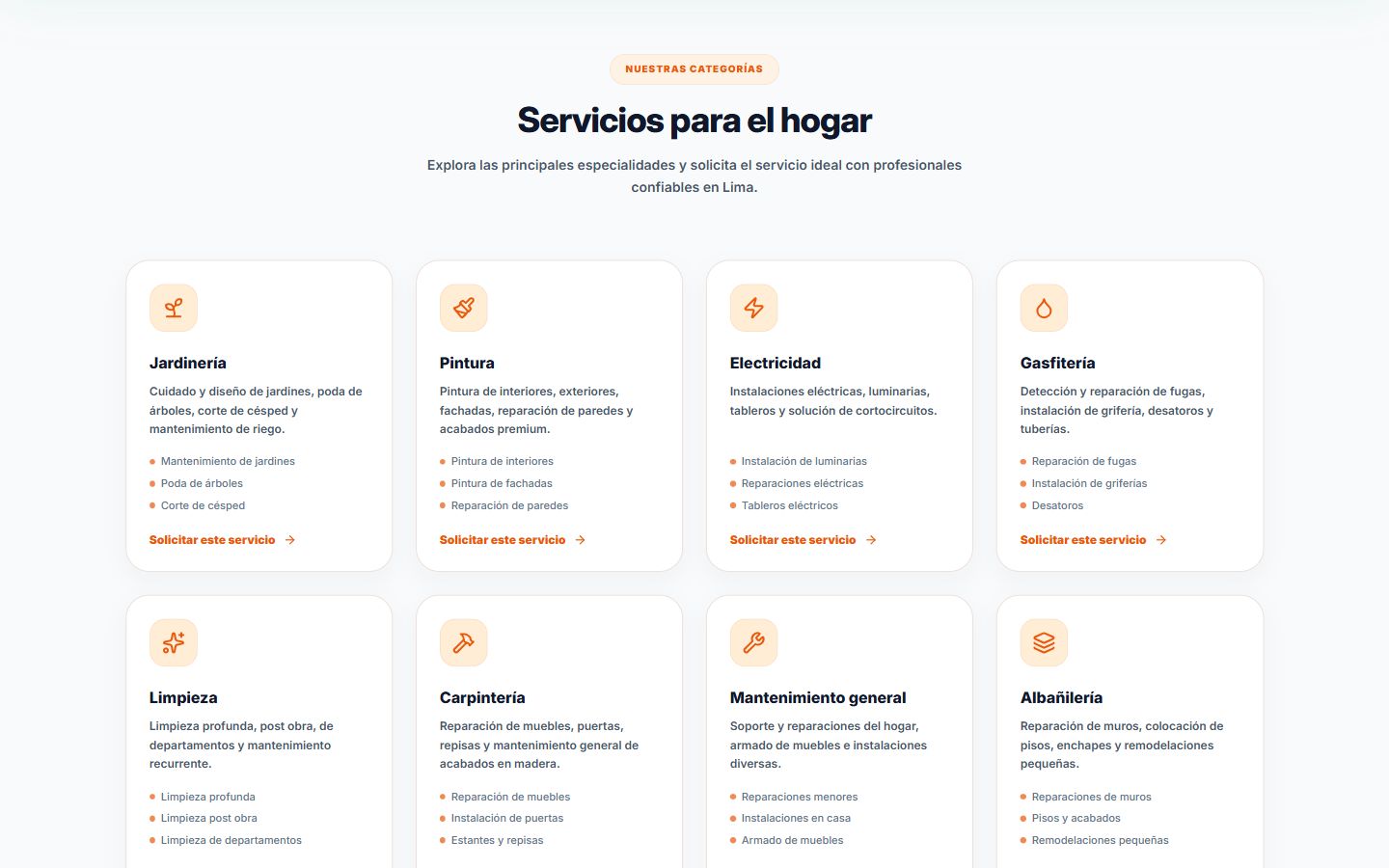
I developed a full-stack MVP for hiring home services in Lima, connecting clients with professionals for gardening, painting, electrical work, plumbing, cleaning, carpentry, and general maintenance. The project was designed around a problem observed in Lima, Peru: many residential service hires still start through informal recommendations and word of mouth, which makes trust, availability, coverage, and history hard to compare. I chose Peru as an intentional learning scope to study a Latin American market outside my Brazilian context and adapt the product to another city, language, district structure, and service routine.
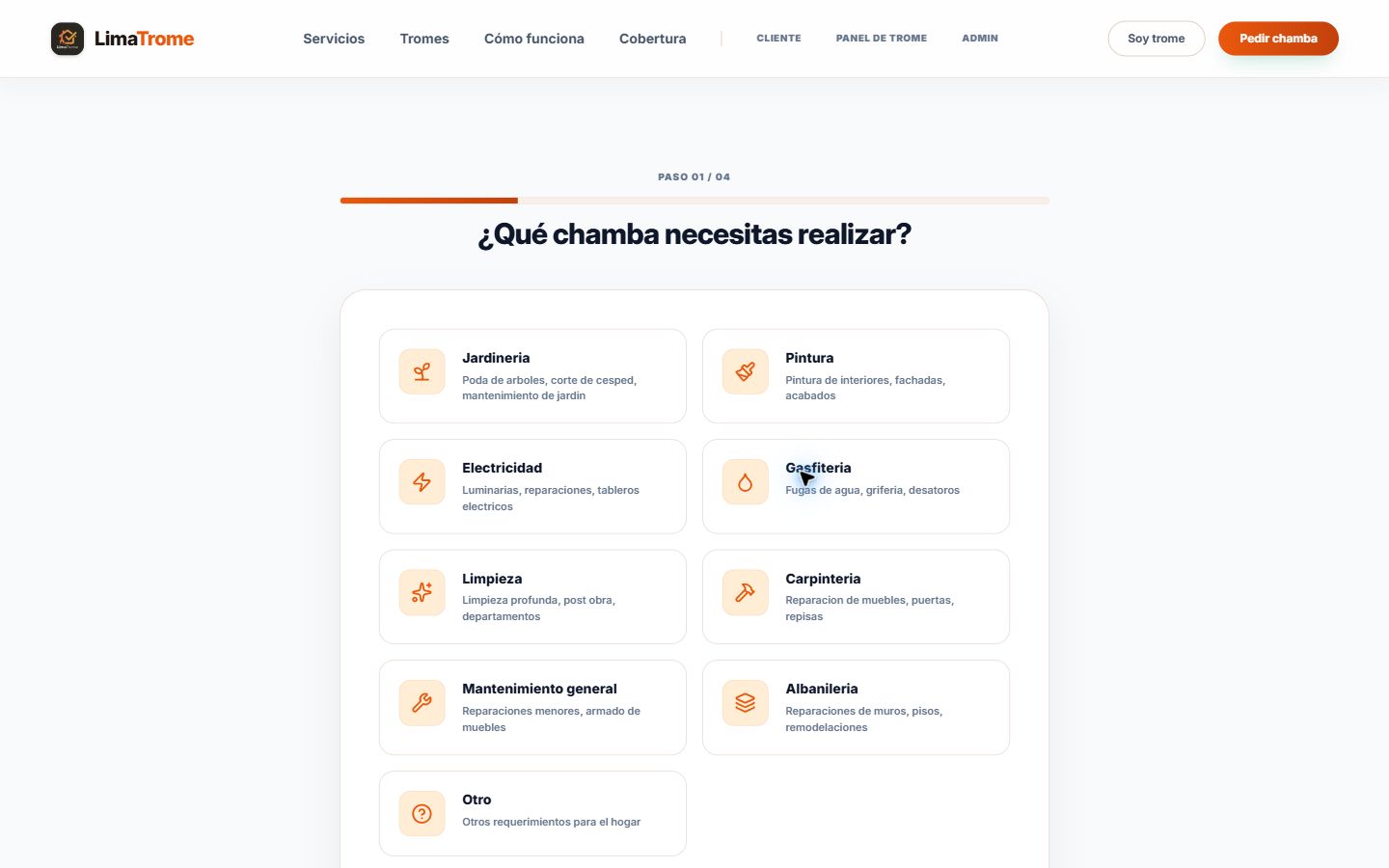
Desktop experience
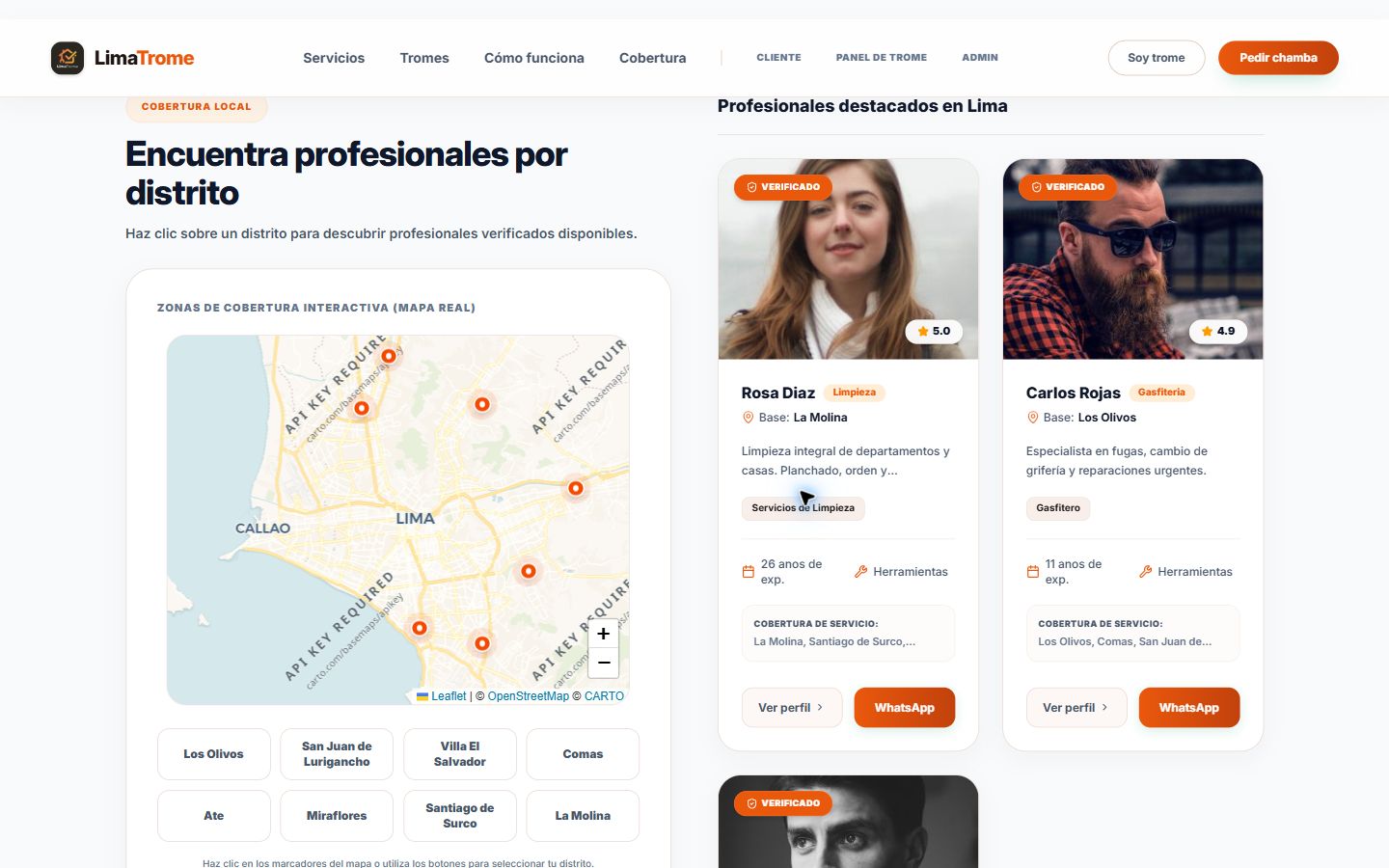
CASE STUDY
Full-stack marketplace MVP for hiring home services in Lima, Peru. Connects clients with maintenance professionals, replacing informal word-of-mouth recommendations with structured district search.
Laravel 11 backend with Sanctum token authentication, isolating client, professional, and admin roles with strict validation.
Matching algorithm scoring professionals by district, service category, rating, weekly availability, and current workload.
Complete request flow with photo uploads, real-time status tracking, and audited modification logs.
The MVP structured an informal hiring process into a functional marketplace with client, professional, and admin flows. It was created as a practical study in requirements analysis, product organization, and Latin American market adaptation, and has not yet been tested with real users.